
 By Its Times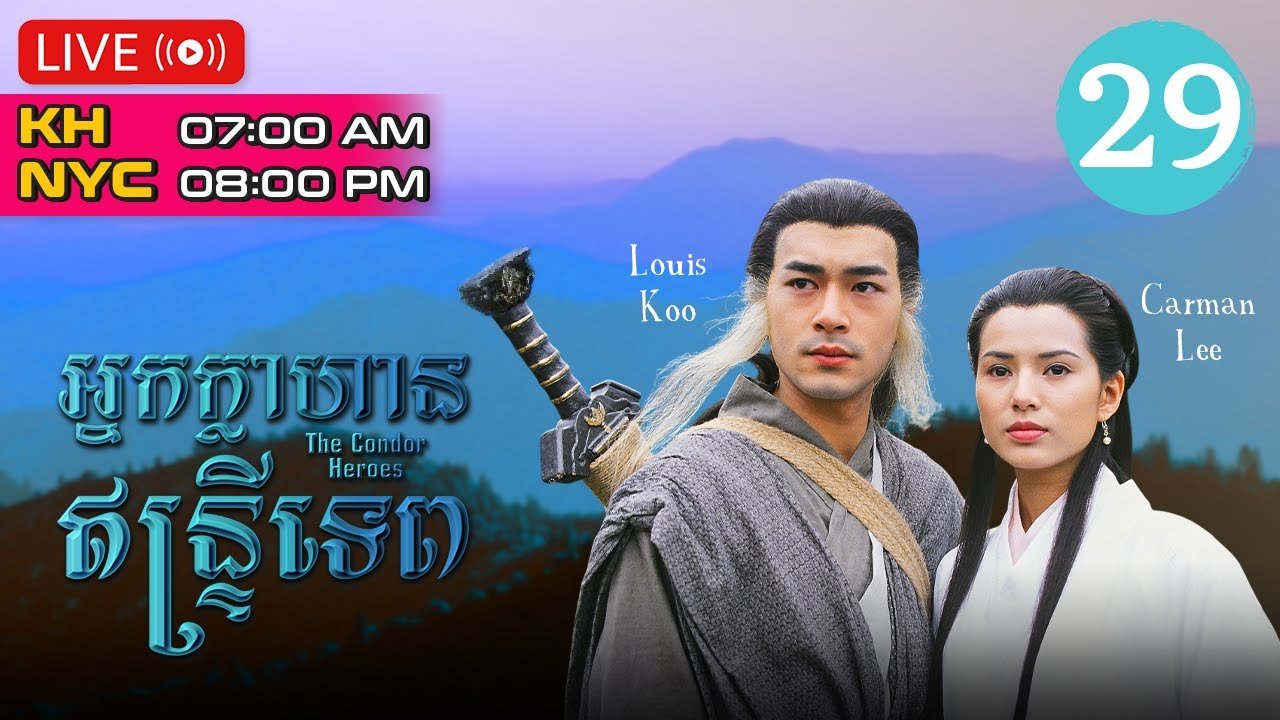
In the landscape of Southeast Asian entertainment, few titles carry as much weight and nostalgic power as the Condor heroe khmer. For over four decades, this sprawling martial arts epic—originally born from the brush of the legendary Chinese novelist Jin Yong—has found its most passionate and enduring fan base in Cambodia. To the Khmer audience, the “Condor Hero” is not just a foreign import; it is a localized phenomenon that has been reshaped by the unique voices of Cambodian dubbers, the historical context of the Mekong region, and a deep-seated love for the “Wuxia” (martial hero) genre. As we enter 2026, the Condor heroe khmer is experiencing a massive resurgence, fueled by cutting-edge cinematic adaptations and a digital revival that bridges the gap between the elderly who watched it on grainy VHS tapes and the youth streaming it on high-definition platforms.
The Phenomenon of the Condor heroe khmer in Cambodian Media
To truly appreciate the Condor heroe khmer, one must understand the environment in which it first thrived. Following the restoration of peace in Cambodia during the late 80s and early 90s, the nation was hungry for storytelling that reflected themes of justice, resilience, and the triumph of the underdog. Into this void stepped the Hong Kong television dramas of the “Golden Age.“
When the first episodes of the Condor heroe khmer (specifically the 1983 and 1995 versions) were broadcast, they didn’t just play on screens; they stopped traffic. Markets would close early, and families would huddle around a single television set to witness the adventures of Guo Jing or the forbidden romance of Yang Guo. The localization of these stories through Khmer dubbing was a masterclass in cultural adaptation. The voice actors didn’t just translate words; they infused the characters with Khmer sensibilities, humor, and emotional cadences that made the “Middle Kingdom” feel like it was just across the border.
The Role of Khmer Dubbing as a Cultural Bridge
The success of the Condor heroe khmer is inseparable from the artistry of the Cambodian voice-over industry. In the 90s, dubbing houses like “Sros Slanh” or local TV stations employed actors who became as famous as the screen stars themselves. These artists had the difficult task of matching the high-octane martial arts choreography with vocal performances that felt authentic to the Khmer tongue. By doing so, they ensured that the Condor heroe khmer wasn’t viewed as a “Chinese show,” but as a shared piece of Asian heritage that belonged specifically to the Cambodian people.
Historical Roots: How the Condor heroe khmer Captured the Mekong
The narrative of the Condor heroe khmer is derived from the Condor Trilogy, which spans several centuries of fictionalized Chinese history. However, for Cambodian fans, the trilogy is often viewed through the lens of two primary arcs: the loyal patriotism of Guo Jing and the rebellious, star-crossed love of Yang Guo.
From the Grasslands to the Palace
The first part of the saga, which many recognize as the foundational Condor heroe khmer story, follows the honest and somewhat slow-witted Guo Jing. His journey from the Mongolian grasslands to the heart of the Song Dynasty resonated with Khmer audiences because of its emphasis on “Khum” (discipline) and “Kte” (loyalty). In a society that values the family unit and national integrity, Guo Jing became the ultimate archetype of the virtuous son and the selfless soldier.
The Rebellious Spirit of Yang Guo
The second phase of the Condor heroe khmer—the “Return” saga—shifted the focus to Yang Guo. This character was the antithesis of the traditional hero: orphaned, cynical, and deeply emotional. His relationship with his teacher, the Little Dragon Maiden (Xiaolongnü), was viewed as a scandalous yet beautiful rebellion against social norms. This particular arc of the Condor heroe khmer has historically been the most popular in Cambodia, inspiring countless songs, poems, and even modern-day wedding photoshoot themes.
The New Era of the Condor heroe khmer with ‘The Gallants’ (2025)
As we look at the latest developments in 2025 and 2026, the Condor heroe khmer has taken a massive leap into the world of high-budget cinema. The release of Legends of the Condor Heroes: The Gallants, directed by the visionary Tsui Hark, has redefined what the franchise means in the modern era.
Tsui Hark’s Vision for the Condor heroe khmer
Tsui Hark, often called the “Steven Spielberg of Asia,” brought a level of technical sophistication to the Condor heroe khmer that was previously unimaginable. Starring the global superstar Xiao Zhan as Guo Jing, the 2025 film focused on the defense of Xiangyang. This wasn’t just a martial arts movie; it was a grand war epic. For the Khmer audience, seeing a beloved childhood story rendered with Hollywood-level CGI and authentic Mongolian locations was a transformative experience.
| Feature | Classic Dubbed Versions (90s) | Modern 2025/2026 Adaptations |
| Visuals | Practical sets and wire-work | Advanced CGI and 8K cinematography |
| Pacing | Long-form (40+ episodes) | Tight, high-stakes cinematic storytelling |
| Cast | Iconic TVB actors (Andy Lau, Louis Koo) | Global idols (Xiao Zhan, Sabrina Zhuang) |
| Accessibility | VHS/Television broadcast | Global streaming and IMAX theater |
The Impact of Xiao Zhan on the Condor heroe khmer
The casting of Xiao Zhan breathed new life into the Condor heroe khmer. As one of the most popular actors in Asia today, his involvement ensured that the “Gen Z” demographic in Cambodia—who may have missed the original TVB craze—was drawn into the lore. His portrayal of a stoic, powerful Guo Jing highlighted the “Gallant” aspect of the title, emphasizing that true heroism lies in protecting those who cannot protect themselves.
Why the Condor heroe khmer Resonates with Cambodian Values
It is worth examining why the Condor heroe khmer has such a unique “staying power” compared to other international franchises. The answer lies in the alignment of wuxia philosophy with traditional Khmer ethics.
The Concept of the ‘Kru’ (Master)
In the Condor heroe khmer, the relationship between a master and a disciple is sacred. This mirrors the Cambodian deep respect for “Kru” (teachers). Whether it is the Seven Freaks of Jiangnan training Guo Jing or Yang Guo learning from the “Giant Eagle,” the theme of passing down knowledge and legacy is a core pillar of Khmer society.
Resilience in the Face of Invasion
The backdrop of the Condor heroe khmer often involves a nation under threat from external forces (the Mongols or the Jin). Cambodia’s own history of resilience and the protection of its cultural identity allows the audience to find a parallel in the struggles of the Song Dynasty characters. When the Condor heroe khmer stands on the city walls to defend his people, he is not just a Chinese hero; he represents the universal spirit of the defender.
Technical Brilliance: Visuals and Music of the Condor heroe khmer
Modern iterations of the Condor heroe khmer have not only improved in terms of acting but also in the “sensory” experience.
Martial Arts Choreography
While the 90s version of the Condor heroe khmer relied on fast-paced editing and simple wire-work, the 2025/2026 productions have integrated traditional “Kun Khmer” and “Bokator” influences in some localized promotional materials, emphasizing the common roots of Asian combat arts. The “Eighteen Subduing Dragon Palms,” the signature move of the Condor heroe khmer, is now rendered with fluid, elemental CGI that makes the technique feel as powerful as the legend describes.
The Soundtrack of a Legend
Music has always been the “soul” of the Condor heroe khmer. The original themes from the 1983 version are still hummed in the streets of Phnom Penh today. Modern composers for the 2025 film have cleverly sampled these classic melodies, creating a nostalgic bridge for older fans while introducing lush, orchestral arrangements for the new generation.
The Digital Resurgence: Condor heroe khmer in the 2020s
The way Cambodians consume the Condor heroe khmer has evolved with technology. We are currently seeing a “Digital Renaissance” of the franchise:
-
Short-Form Content: TikTok and Facebook Reels are flooded with clips of the Condor heroe khmer, often featuring funny “voice-overs” or dramatic fight scenes.
-
Streaming Platforms: Apps like Soyo and local streaming services have archived the original Khmer-dubbed versions, allowing them to reach a global Khmer diaspora in the US, France, and Australia.
-
Fan Communities: Online forums dedicated to the Condor heroe khmer allow fans to debate which actor played the best Yang Guo or to share rare behind-the-scenes footage from the 90s.
The Enduring Legacy of the Condor heroe khmer
As we reach the conclusion of this exploration, it is clear that the Condor heroe khmer is much more than a television series or a movie. it is a “living legend.” It has survived the transition from black-and-white screens to IMAX 3D, and from physical tapes to cloud storage. The Condor heroe khmer has become a part of the Cambodian identity because it speaks to the best parts of human nature: our capacity for love, our drive for justice, and our ability to remain loyal to our roots even when the world around us is in turmoil.
The 2025-2026 resurgence proves that as long as there are people who dream of heroes and appreciate the beauty of a well-told saga, the Condor heroe khmer will continue to soar. It remains the “Gold Standard” of wuxia in the Mekong, a timeless bridge between the past and the future.Conclusion
In summary, the Condor heroe khmer represents a unique intersection of literature, cinema, and cultural localization. From its humble beginnings as a dubbed Hong Kong drama to its current status as a blockbuster cinematic universe, it has consistently captured the imagination of the Cambodian people. The story of the “Condor Hero” is a reminder that while languages and borders may separate us, the stories of heroes who fight for love and country are universal. Whether you are a “legendary fan” of the 80s or a newcomer inspired by the 2025 film, the Condor heroe khmer offers a world of adventure that is as vast as the sky and as deep as the Mekong.
Frequently Asked Questions (FAQs)
1. Is the “Condor heroe khmer” different from the Chinese version?
The core plot remains the same, but the Condor heroe khmer refers to the specific experience of watching the story with Khmer dubbing, which often includes localized humor and nuances that resonate specifically with Cambodian culture.
2. Who is the most popular actor to play the Condor Hero in Cambodia?
Historically, Louis Koo (1995) and Andy Lau (1983) are the most beloved by the older generation. However, Xiao Zhan (2025) has quickly become the favorite for the younger demographic.
3. Why is the story called “Condor” if the birds are eagles?
This is a famous translation quirk! The original Chinese word Diao (雕) refers to an eagle or a vulture. However, the early English and Khmer translations used “Condor,” and the name stuck as part of the brand’s legacy.
4. Can I watch the 2025 movie ‘The Gallants’ with Khmer subtitles?
Yes, following its theatrical release in early 2025, the film was picked up by regional streaming services in Southeast Asia, which provide both Khmer subtitles and specialized Khmer dubbing.
5. What are the main values taught in the Condor heroe khmer?
The series emphasizes “Loyalty” (to one’s country and family), “Justice” (protecting the weak), and “Faithfulness” (especially in the legendary romance between the two main protagonists).